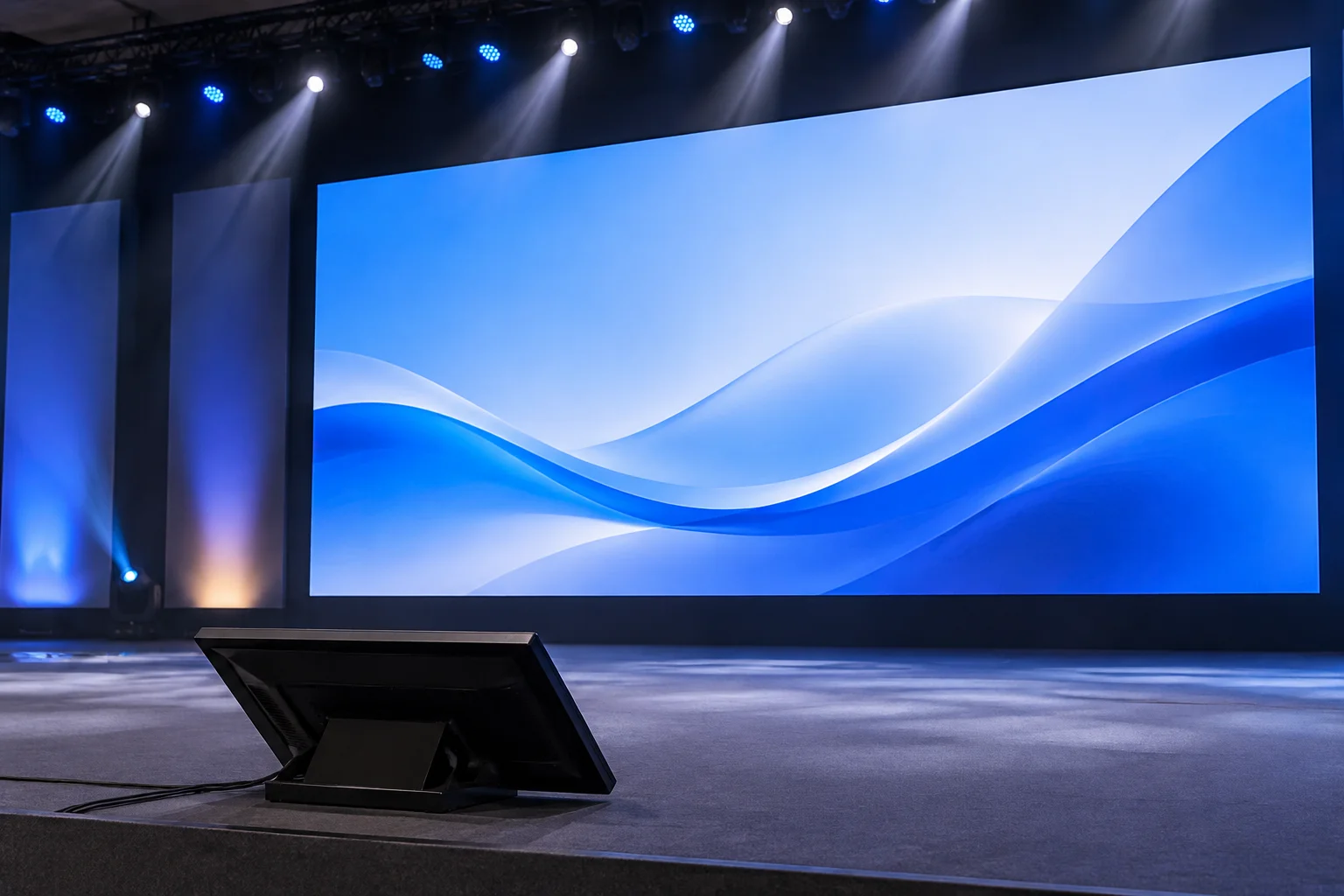
Audience Screens and Stage Screens Serve Different Needs
Understand why house visual clarity requires separate delivery logic from presenter-facing stage monitors and teleprompter displays.
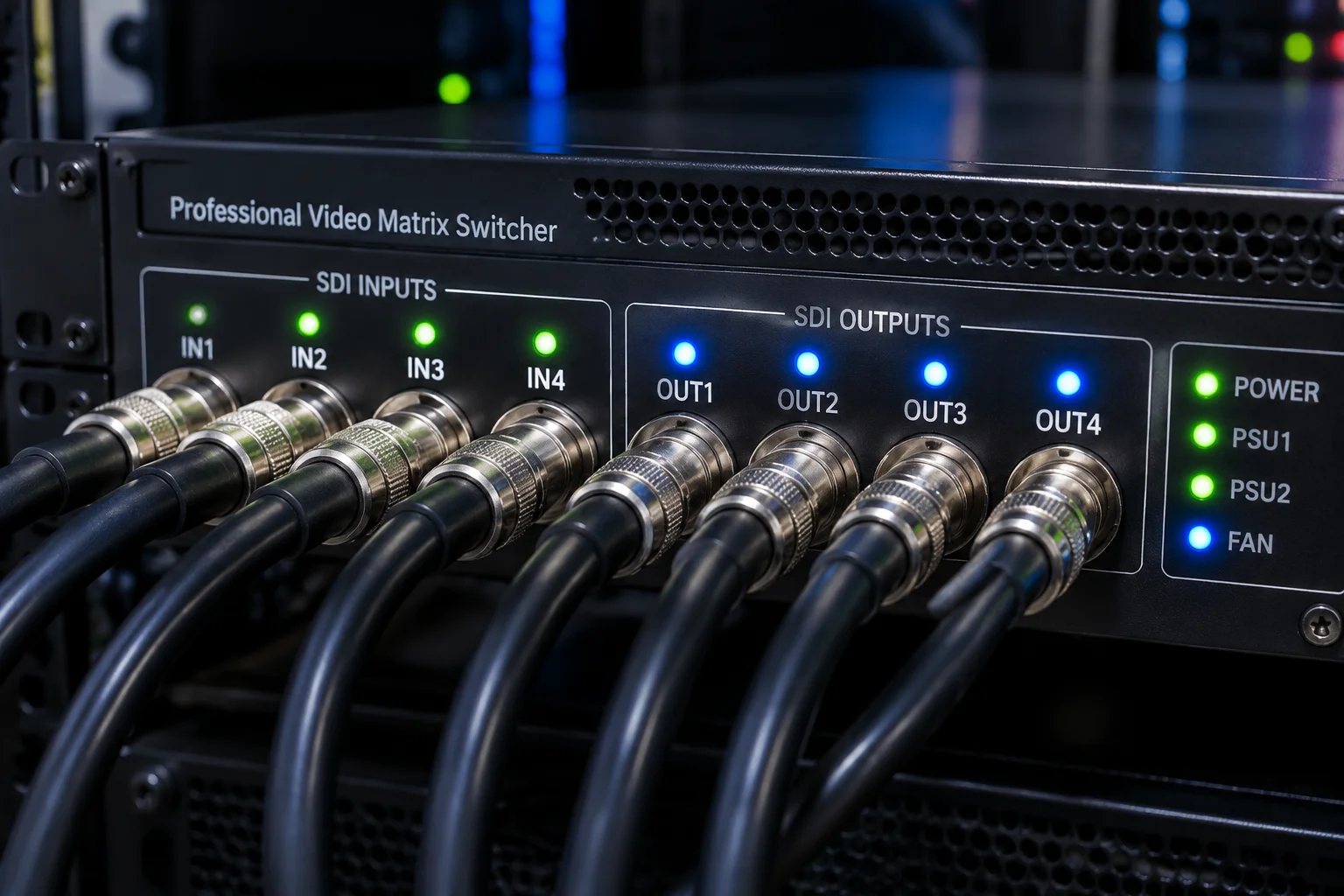
Practical protocols, technical architecture breakdowns, and troubleshooting strategies for multi-screen live production setups and stage confidence feeds.
Understand why house visual clarity requires separate delivery logic from presenter-facing stage monitors and teleprompter displays.
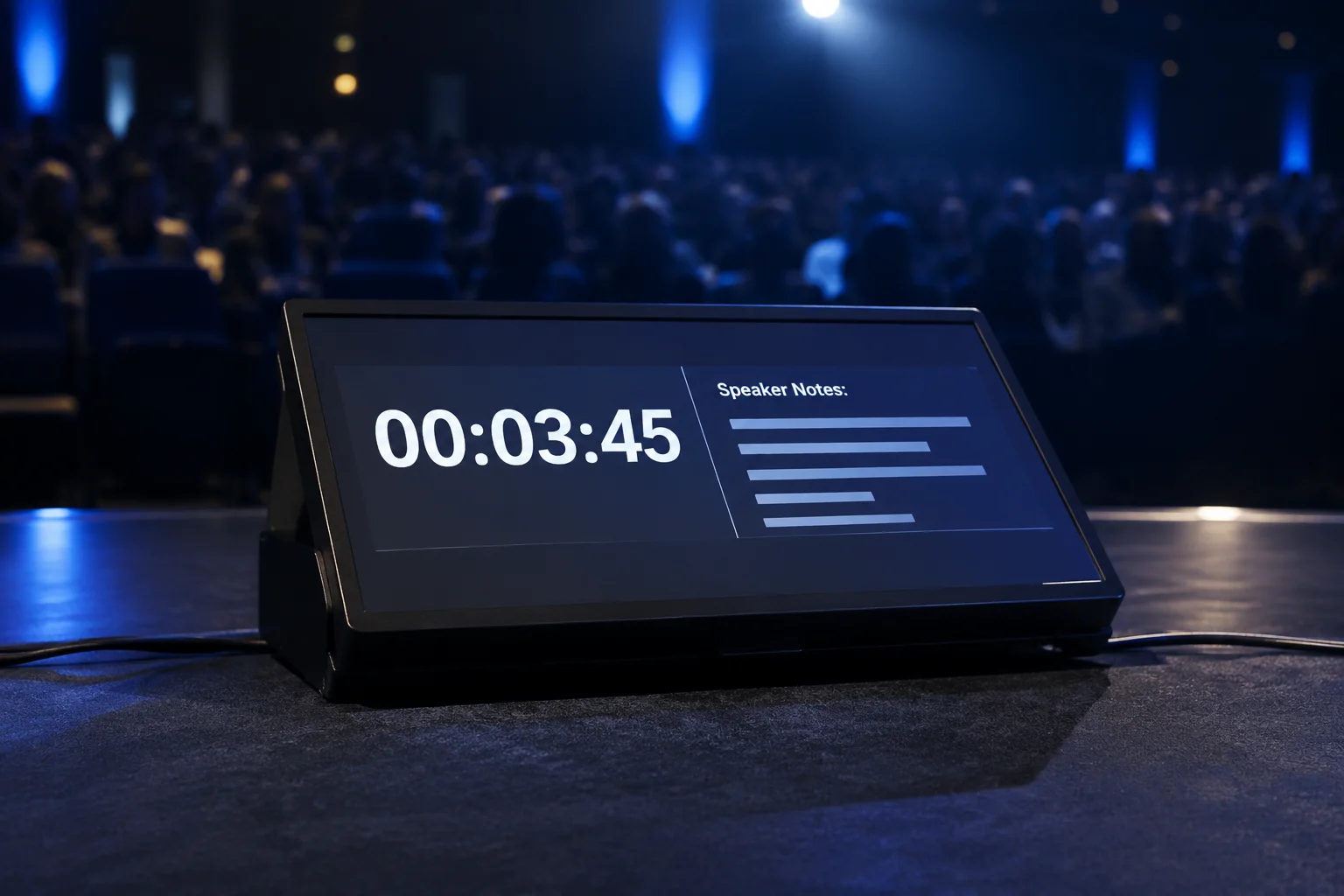
A methodical breakdown of routing software display destinations to hardware matrix inputs, splitters, and direct GPU outputs.
Explore the visual cognitive load on stage talent and how tailored confidence feeds keep speakers synchronized without distractions.
Isolate and manage lower-thirds, video playback, and live slide layers across multiple independent audience canvas surfaces.
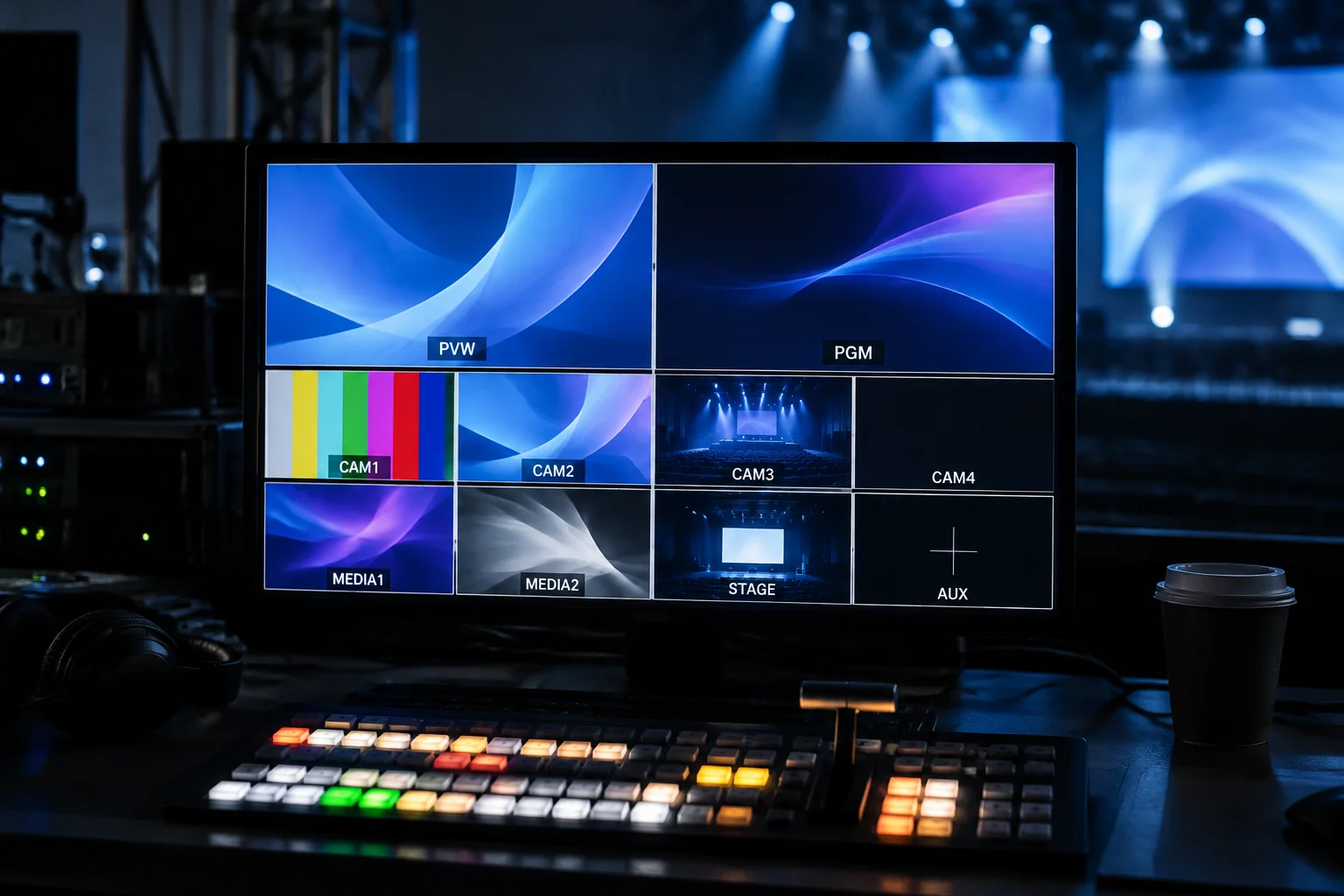
Utilize software preview multiviewers and hardware loop-outs to validate stage looks before sending live signals downstream.
Identify and prevent black screens, unmapped canvas zones, and EDID handshake errors caused by unassigned logical endpoints.
Resolve pixel aspect discrepancies, scaling distortion, and frame synchronization mismatches across diverse display hardware.
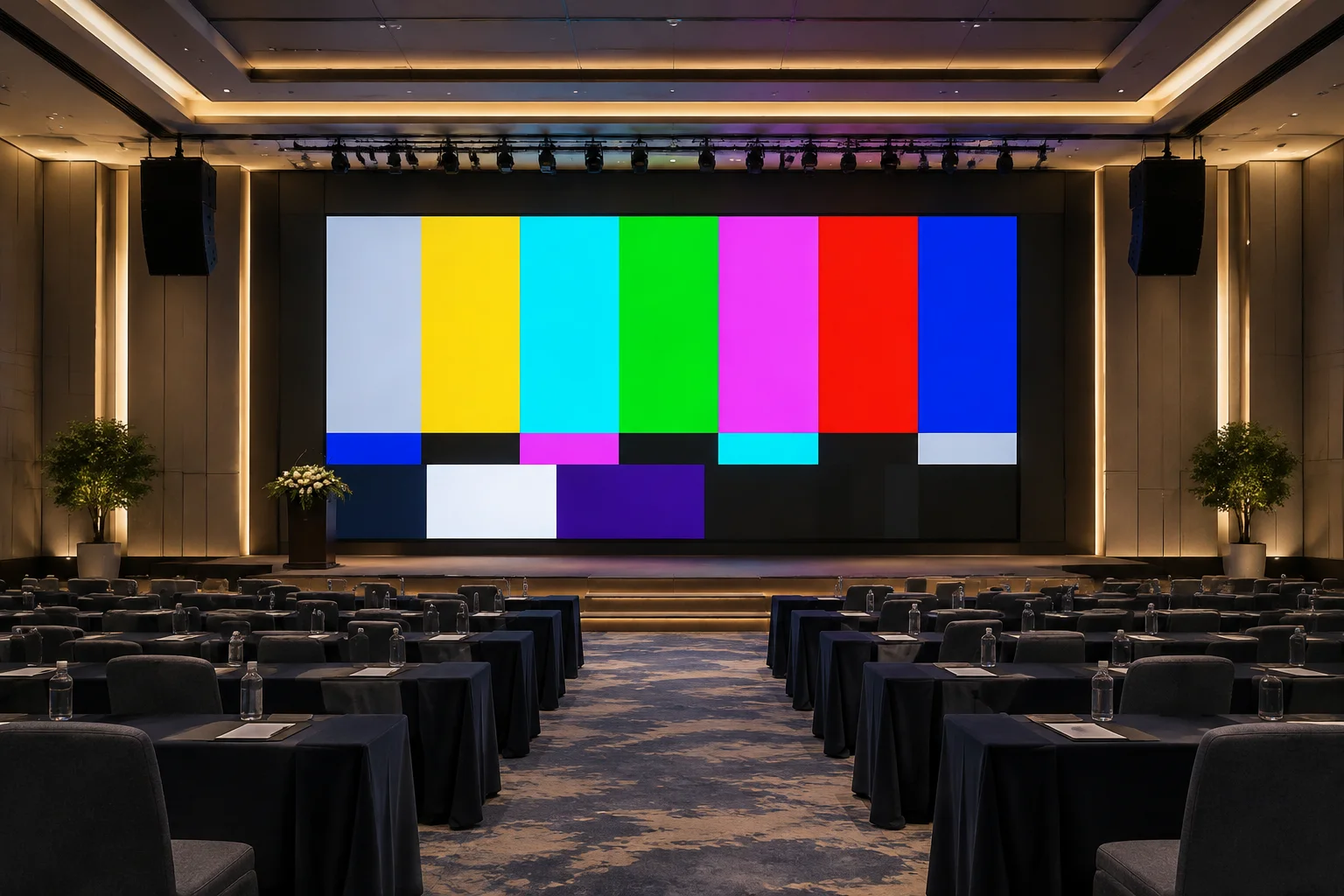
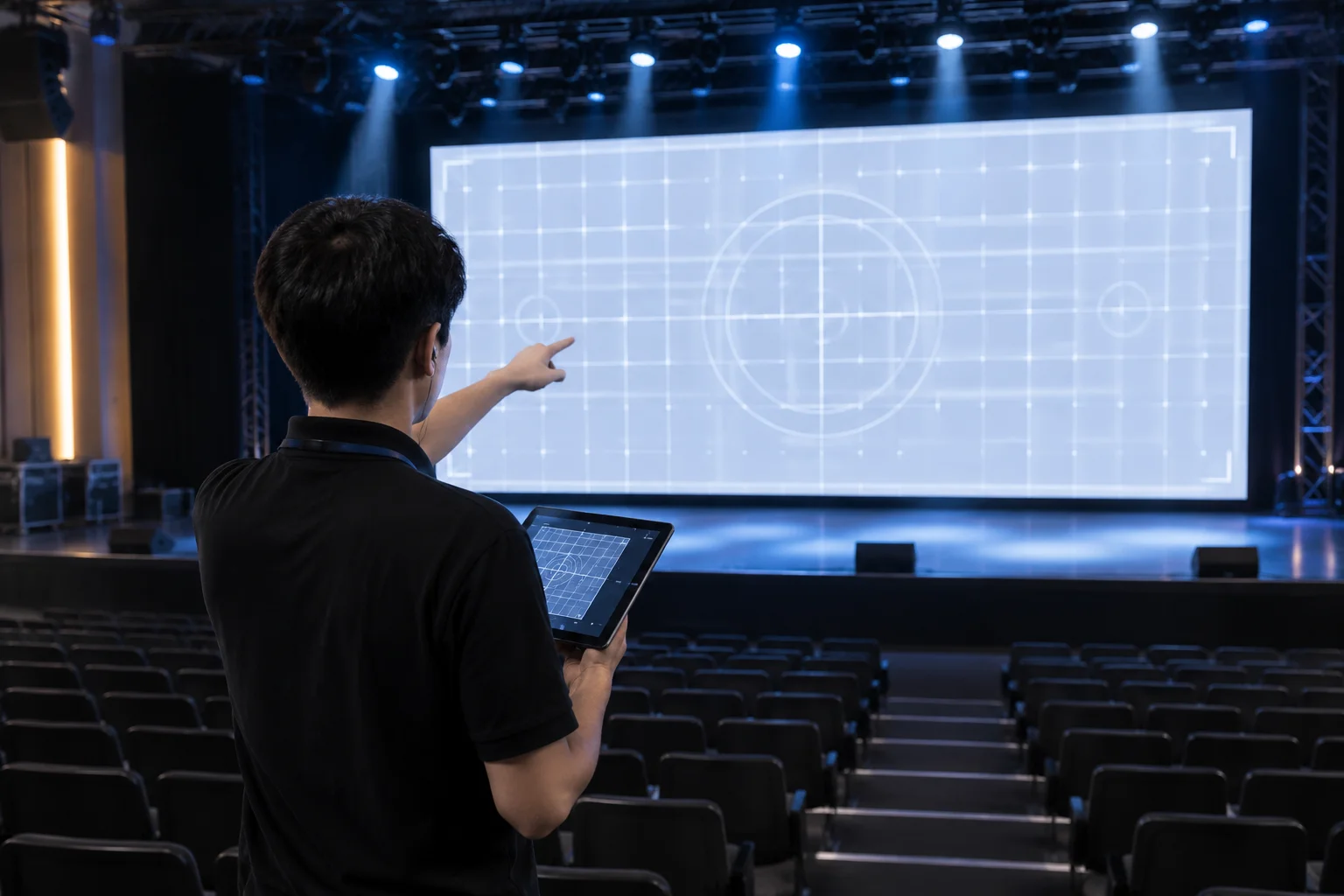
A step-by-step checklist to confirm raster integrity, sync timing, and cue responses prior to opening auditorium doors.
Drafting clear visual schematics and wire sheets that operators, video engineers, and switcher technicians can read at a glance.
Handling live rundown modifications, emergency scenic recalculations, and layout swaps mid-event without visual interruption.
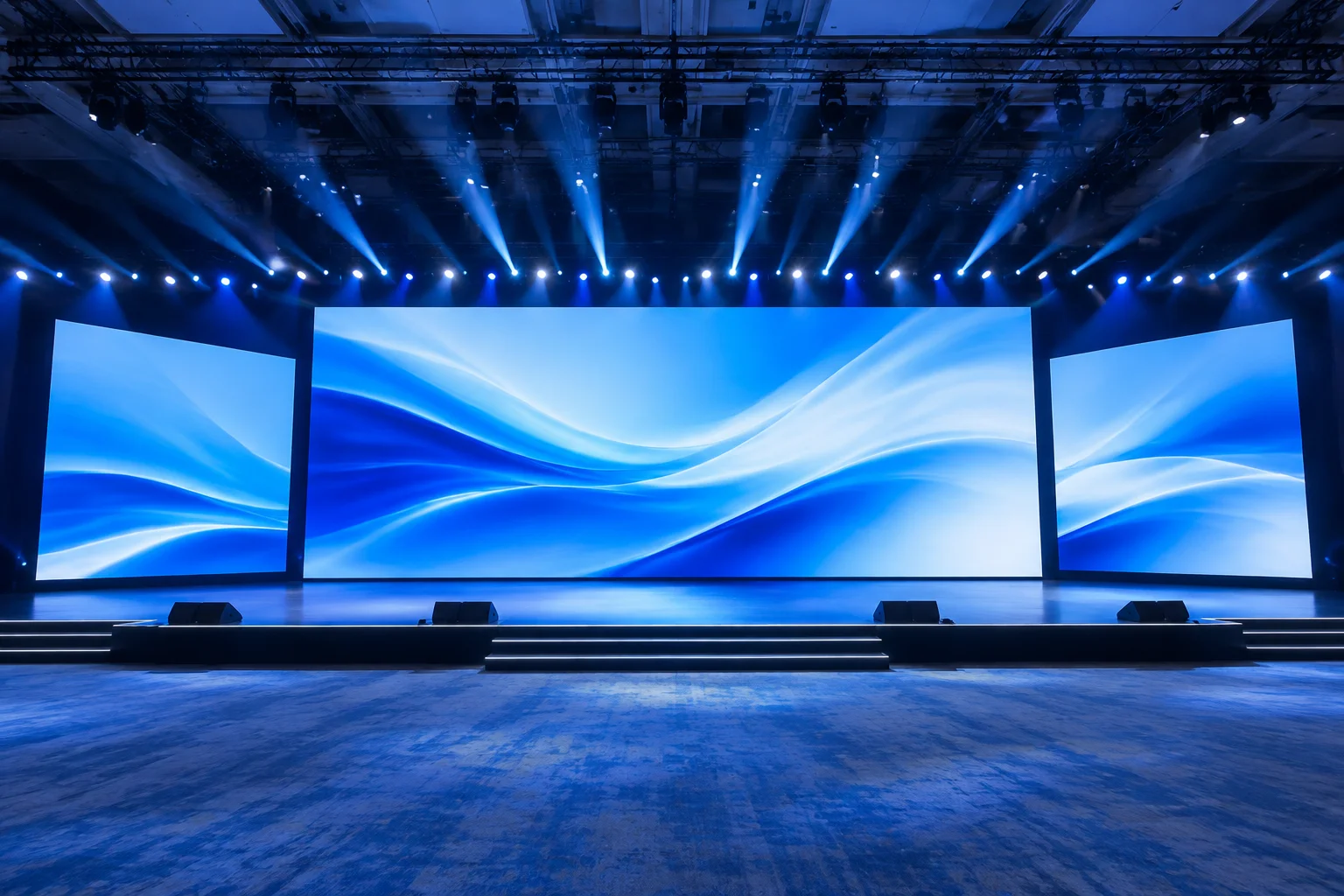
A field case study on choreographing left-center-right auditorium projections with distinct IMAG, keynote, and graphic feeds.